The Forbidden City is enormous — nearly a thousand buildings across a walled complex — and rushing it in two hours misses the point entirely. Most visitors do better allocating a half-day, moving from the southern Meridian Gate through the ceremonial halls toward the Imperial Garden at the northern end, rather than trying to see everything at once.
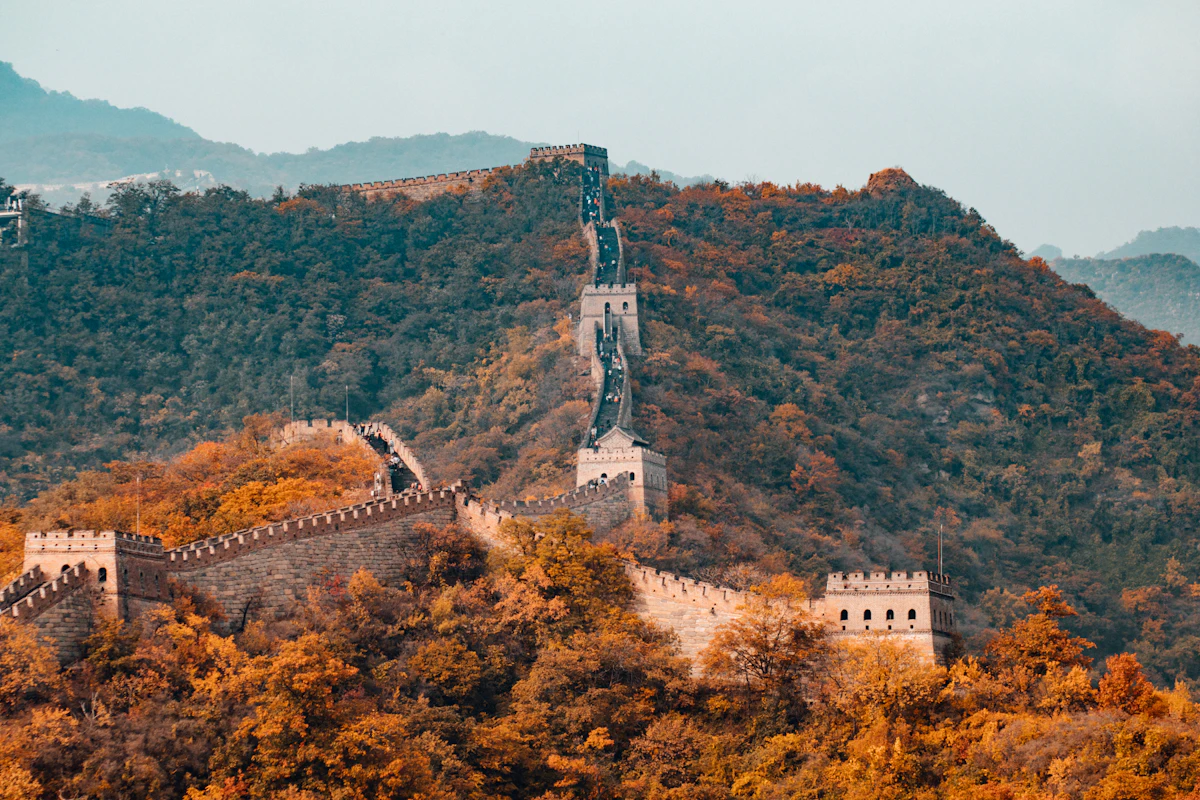
Choosing a Great Wall section matters more than most first-timers realize. Badaling is the most restored and most crowded, easiest logistically from central Beijing; Mutianyu, about 1.5–2 hours away, offers a similarly restored wall with noticeably thinner crowds and a scenic cable car or toboggan descent option.
Beijing's hutongs — traditional courtyard-house neighborhoods threaded by narrow alleys — survive in pockets like Nanluoguxiang and around the Drum and Bell Towers, offering a street-level contrast to the grand imperial architecture elsewhere in the city. A jianbing (savory breakfast crepe) from a hutong stall is a genuine local morning ritual worth joining.
Payment in Beijing runs almost entirely through Alipay and WeChat Pay now, and foreign visitors can link international cards to either app for tap-and-scan payments nearly everywhere — carrying cash as a backup is still wise, but expecting to pay by card alone will cause friction at small vendors. Many nationalities also qualify for China's 144-hour visa-free transit, worth checking before booking flights.
Beijing's subway network is extensive and inexpensive, covering the Forbidden City, Temple of Heaven, and most central sights without needing a car. Use TopTenAtlas category lists for restaurants and tourist attractions to plan a route by district, since the city's scale rewards grouping sights geographically rather than jumping across town.